
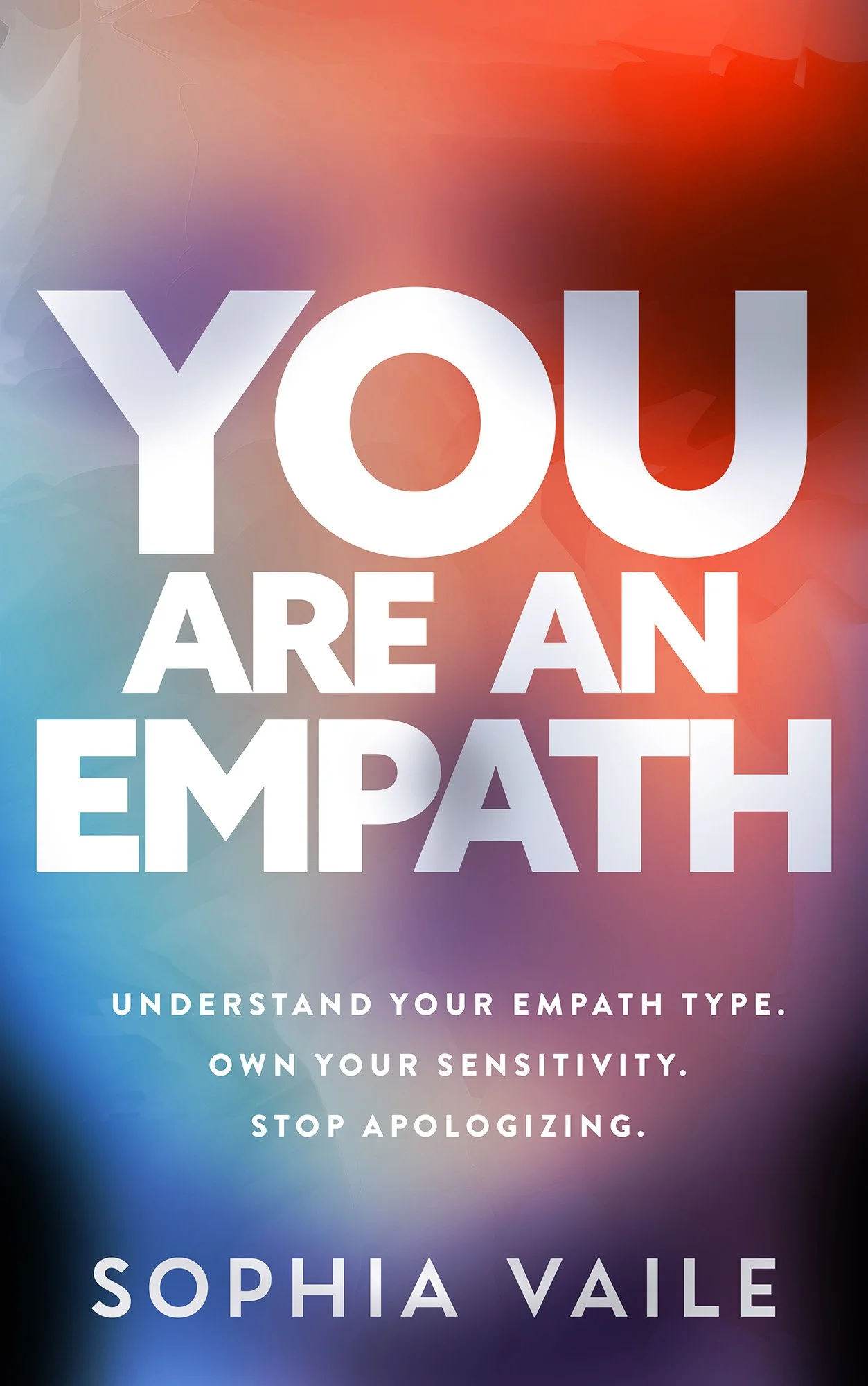
You Are an Empath: A Book Review for Those Who Feel Too Much

As someone who feels a lot, and with emotional attunement being a requirement of my work, I identify as highly empathic.
I know this sensitivity is a gift, but there are moments when I find myself searching for ways to recharge after a long day of perceiving my environment and the people around me.
Yes, you can learn how to turn empathic sensitivity down, but why would you want to?
I believe emotional perception is a powerful intuitive gift.
It’s how we connect, relate, and understand others beyond words. I have no interest in not being an empath.
What does matter, though, is learning how to manage empathic energy in a world that can feel heavy, overstimulating, and at times, quite emotionally noisy.
That’s where You Are an Empath can help.

A Refreshingly Validating Read
You Are an Empath is a validating book for anyone who has ever been told they’re “too sensitive.”
It doesn’t try to fix empaths or tell them how to toughen up. Instead, it explains how empathic sensitivity actually works and why it makes sense.
What sets this book apart from other empath guides is its balance. Sophia weaves together:
The history of the term empath
Neuroscience and psychology research
Lived, embodied experience
And intuitive understanding as an empath herself
All without losing warmth, accessibility or the point of the book.
Rather than leaning too heavily into either lofty spirituality or overly clinical language, the book offers a grounded, and at times, an analytical explanation of empathic perception, backed by research, while still honoring intuition as a real and valid form of knowing.
Sophia also shares her own story as an empath, which makes it clear she understands this experience from the inside. This isn’t an untested hypothesis - it’s lived reality, thoughtfully explained.
Easy to Read, Easy to Absorb
One thing I especially appreciated is how the book is structured. The chapters are short, clear, and intentionally paced, with concepts broken down into digestible sections and bullet points.
I loved reading a chapter, stepping away to reflect while doing other things around the house, and then returning to the book once the ideas had time to settle.
It’s a book that respects how empaths naturally process information - slowly, intuitively, and in layers.
Empath Types (More Than Just “Feeling Everything”)
One of the most interesting sections of the book explores the idea that there isn’t just one way to be an empath.
Sophia breaks empathic sensitivity into four distinct empath types, highlighting that not all empaths experience or process emotion in the same way.
Absorbing emotions is only one possible expression of empathy and for many readers, this section alone will feel eye-opening, and like you’re being seen and understood.
If you’re unsure which empath type fits you best, there’s also an Empath Quiz available that helps clarify your dominant pattern.
Practical Guidance That Actually Feels Supportive
Once you understand your empath type, the book moves into practical application, including:
How to work with your sensitivity instead of against it
How to stop carrying emotional responsibility that isn’t yours
Where empathic gifts are most valued in real-world settings
I especially loved the section on careers. So often I hear people say they’re “too empathic to work,” when in reality, they just haven’t been shown where their gifts fit best.
Sophia clearly outlines job paths and roles that different empath types may actually enjoy and thrive in.
The book also includes actionable steps and, perhaps most importantly, permission - permission to detach, to rest, and to stop being emotionally “on call” at all times.
As someone who often feels compelled to be available whenever someone needs support (paid or unpaid, during work hours or not), this part landed deeply.
Being reminded that it’s okay to go off duty felt both grounding and freeing.
Key Takeaways
Here are a few high-level takeaways that you’ll get from reading this book -
Empathy is not a flaw - it’s a form of perception
Sensitivity doesn’t need to be shut down, just understood
Not all empaths absorb emotions the same way
Boundaries don’t reduce compassion; they make it sustainable
Knowing your empath type can change how you relate to work, relationships, and rest
You’re allowed to detach without guilt

Final Thoughts
Overall, You Are an Empath offers a refreshing, grounded perspective on empathic gifts, especially through its exploration of empath types, practical guidance and career alignment.
If you identify as empathic, have ever felt “too much,” or simply want a deeper understanding of the science and intuition behind emotional sensitivity, I highly recommend this book.
I’ve already read it twice and picked up new insights each time - which, to me, is always the sign of a meaningful read.
Other Articles You May Enjoy:
Amazon and the Amazon logo are trademarks of Amazon.com, Inc. or its affiliates.