
What Grasshoppers Can Teach You About Life
Published 2026-09-18
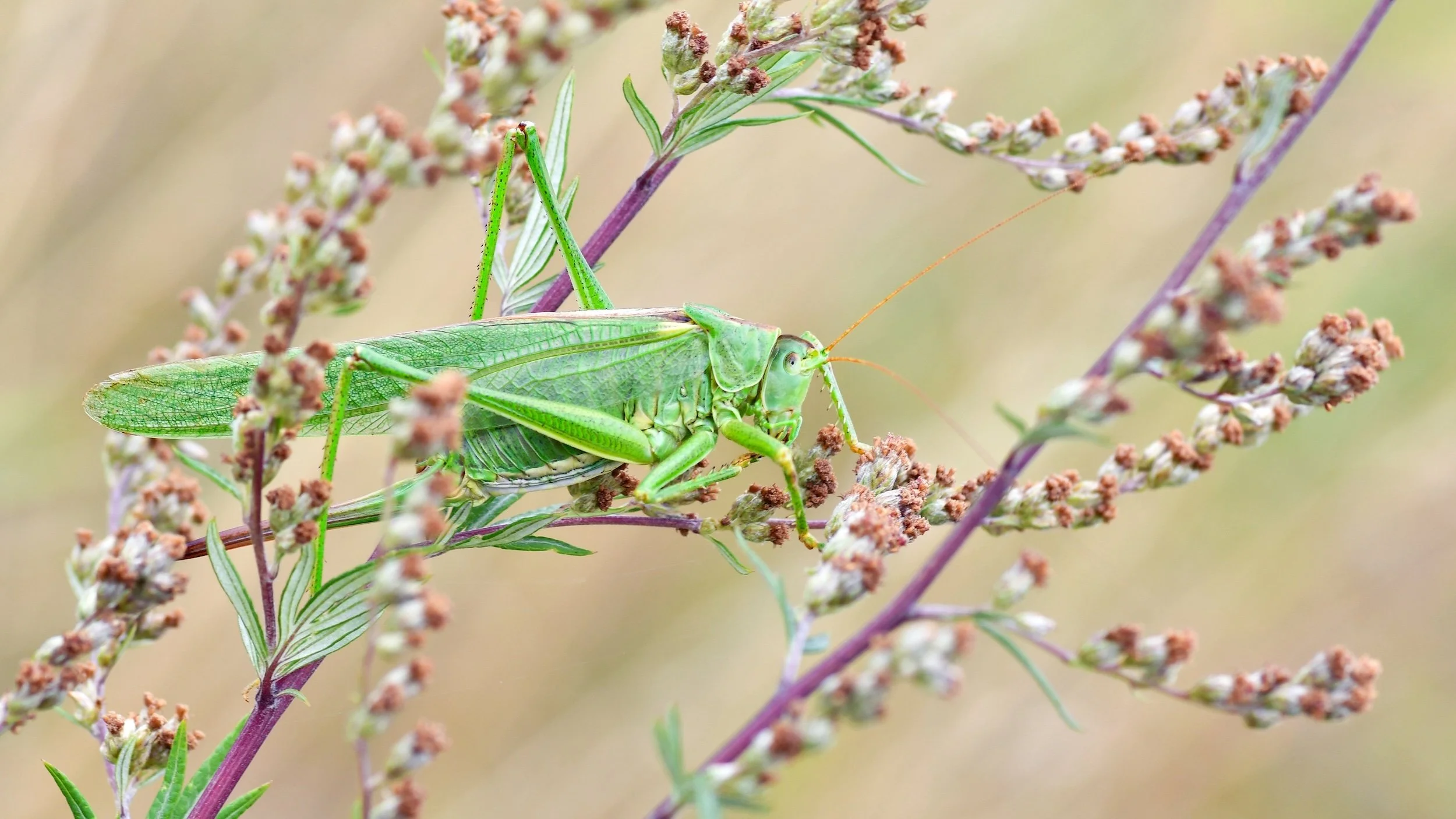
Late summer to early fall is the time of grasshoppers.
By this point in the season, they have reached full maturity and it has taken the entire summer to get here.
Young grasshoppers hatch in the spring and pass through several development stages before getting their wings. It is only during this final stage of their lives that they grow wings, learn to fly, and begin their familiar singing.
And then, as soon as the hard frost arrives, the singing vanishes.
One day, there is a chorus of insect sounds. Next, there is silence.
Emotionally, you probably know this moment.
You know the quiet that arrives when the insects suddenly stop singing because it is one of the clearest signs that the seasons are changing.
There is a beauty in that quiet.
It tells you that the grasshoppers, and all the other seasonal insects, have completed their life cycle.
It is done.
The eggs are now resting in the ground, carrying with them the promise that the species will continue next year.
And perhaps that is part of the lesson before we even get into grasshopper symbolism:
there is a time for becoming, for fully living, for letting things rest and for being done.
So now that we have romanticized their life a little, let's talk about what grasshoppers may symbolize when they appear in yours.
Before we get started, you may be wondering...
What is the difference between crickets and grasshoppers?
While they are both part of the order Orthoptera and have those distinctive jumping legs, there are a few key differences:
Crickets are nocturnal, while grasshoppers are primarily active during the day.
Crickets chirp by rubbing their wings together, while grasshoppers produce sound by rubbing their hind legs against their wings.
Crickets are omnivores, while grasshoppers are primarily herbivores.
Those differences matter because, when we're looking at symbolism, we're looking at the particular qualities that make the grasshopper a grasshopper.
And one of those qualities is its remarkable ability to adapt.
6 Spiritual Lessons From the Grasshopper
1. Mimic Your Natural Environment
Grasshoppers often match the colors of their surrounding habitat, particularly species living in rocky or sandy environments.
These color changes can sometimes happen relatively quickly and are connected to pigments in the outer layers of their bodies.
So when a grasshopper hops into your life, it could be a reminder to align with the environment you're actually in—not the environment you used to be in.
Perhaps where you are now is different from where you started.
Maybe your circumstances have changed. Your relationships have changed. Your priorities have changed. You have changed.
And yet, part of you may still be trying to operate according to an old version of yourself.
The grasshopper can remind you that adapting doesn't mean losing yourself. Sometimes, it means allowing your outer behavior, choices, or approach to reflect the reality of where you are now.
Too often, we're encouraged to hold onto what was—to who we were, where we were, and how things used to work.
But you are allowed to choose again.
And perhaps the new choice is easier than you think.
Sometimes, it is the resistance to adapting that makes life harder.
2. Make Better Use of Your Habitat
The grasshopper doesn't just adapt through its coloring. Different species have developed remarkably different ways of surviving within their environments.
Some grasshoppers can swim and lay their eggs in aquatic environments.
Others live at high altitudes and may not even develop wings.
Some species are adapted to deserts, where they rest directly on the sand rather than creating burrows. Others conceal themselves by clinging to stems, remaining motionless, and quickly disappearing behind vegetation, when needed.
Even their mating strategies vary according to their environment and what resources are available.
In other words, the grasshopper doesn't wait for its environment to become ideal before getting on with things.
It works with what is already there.
And that can be an important spiritual message.
When a grasshopper appears, ask yourself: Am I making the best use of the environment I'm already in?
Perhaps there is something around you that you've overlooked because you're focused on what you don't have or something that is not working.
Maybe the resources, relationships, opportunities, or circumstances available to you right now could be used differently.
The grasshopper invites you to look around.
What does your current environment offer you?
What natural advantages are already available?
And what could change if, instead of trying to make your surroundings fit an old strategy, you changed your strategy to fit where you are now?
Sometimes growth isn't about finding a completely new place.
Sometimes, it is about learning how to thrive differently where you're already standing.
3. Take a Leap of Faith
Of course, we can't talk about grasshopper symbolism without talking about jumping.
You probably have had the experience of walking through a grassy field and suddenly having a grasshopper leap out from underneath your feet.
That jump is part of the grasshopper's message.
Sometimes, you already know what you need to do.
You don't need another sign, another conversation, or another round of telling everyone what you're going to do.
You just need to take the first step and do it.
The grasshopper isn't necessarily asking you to make a dramatic, life-altering change. It may simply be encouraging you to take a leap into something you've been avoiding.
That small action could shift a relationship, move your career forward, or help you finally get past an obstacle you've been circling for too long.
You have the wisdom you need to take the leap.
You may not be able to see exactly where you'll land, but you don't need to.
Sometimes, the leap itself is what creates the movement you've been waiting for.
4. Embrace the Ebbs and Flows of Life
Grasshopper populations naturally fluctuate.
There may be several years when populations are high or even very high, followed by several years when they are much lower.
In other words, abundance and scarcity naturally take turns.
If you've ever dealt with an unusually large number of grasshoppers in your yard, this can be a comforting reminder: a period of intense activity doesn't necessarily last forever.
Sometimes, you simply have to move through the cycle.
And life works much the same way.
There may be periods when everything seems to be happening at once—opportunities appear, your schedule is full, relationships are active, and you're accomplishing more than usual.
Then, suddenly, things quiet down for a little while.
The activity dies back. There is less to do, fewer opportunities, or simply more space to breathe.
Neither period is necessarily better than the other.
When a grasshopper comes into your life, take a moment to notice what kind of cycle you're currently in.
Are things abundant and active right now?
If so, take advantage of what is available. Say yes to the opportunities that make sense, use your resources, and make progress while you have the momentum.
Or are you in a quieter cycle?
If so, don't assume you're falling behind. This may be a time to conserve your energy, simplify your priorities, and focus on what will create the greatest results with the resources you have.
You don't have to force every season to look the same.
Sometimes the wisdom is in recognizing the cycle you're in and adjusting your actions accordingly.
5. Be Opportunistic
Grasshoppers are opportunistic feeders.
Though they do have preferences, they tend to eat what is readily available, rather than waiting for a particular plant or food source to appear.
When conditions are favorable, they take advantage of what the environment provides.
Their presence can be a reminder to eat what the season gives you.
In your own life, this might mean being willing to work with the opportunities, resources, relationships, or circumstances that are available to you now rather than holding out for everything to look exactly the way you imagined, or ignoring what you have before you because you’re wishing for some far off future resources to appear.
This doesn't mean settling.
It means recognizing an opportunity when it is actually in front of you.
The grasshopper invites you to favor flexible intelligence over stubborn consistency.
Sometimes the wisest thing you can do is look around, notice what is available, and make good use of it.
Ask yourself: What resource is available to me right now that I may be overlooking?
6. Leave What No Longer Serves
Being opportunistic also means knowing when something is no longer available.
Grasshoppers are part of the ecosystem, and their feeding can influence the plants around them.
But when the resources in one area become depleted, they don't wallow around, remaining in an empty field waiting for what used to be there to return.
They move on.
That can be a powerful spiritual message.
There are times in life when something has simply run its course.
A relationship, job, opportunity, habit, identity, or way of doing things may have once provided exactly what you needed and now it doesn't.
That doesn't mean it was a mistake.
It means the season changed.
Grasshoppers don't sit in an empty field mourning the resources that are no longer there.
They respond to what is present and move toward what can sustain them.
When a grasshopper appears, consider whether there is something you are continuing to hold onto simply because it once worked.
You are allowed to leave when the resources run dry.
Sometimes moving on isn't giving up.
Sometimes it is recognizing that there is nothing left for you to gather here and knowing there is always another field somewhere out there waiting.
The Grasshopper's Message
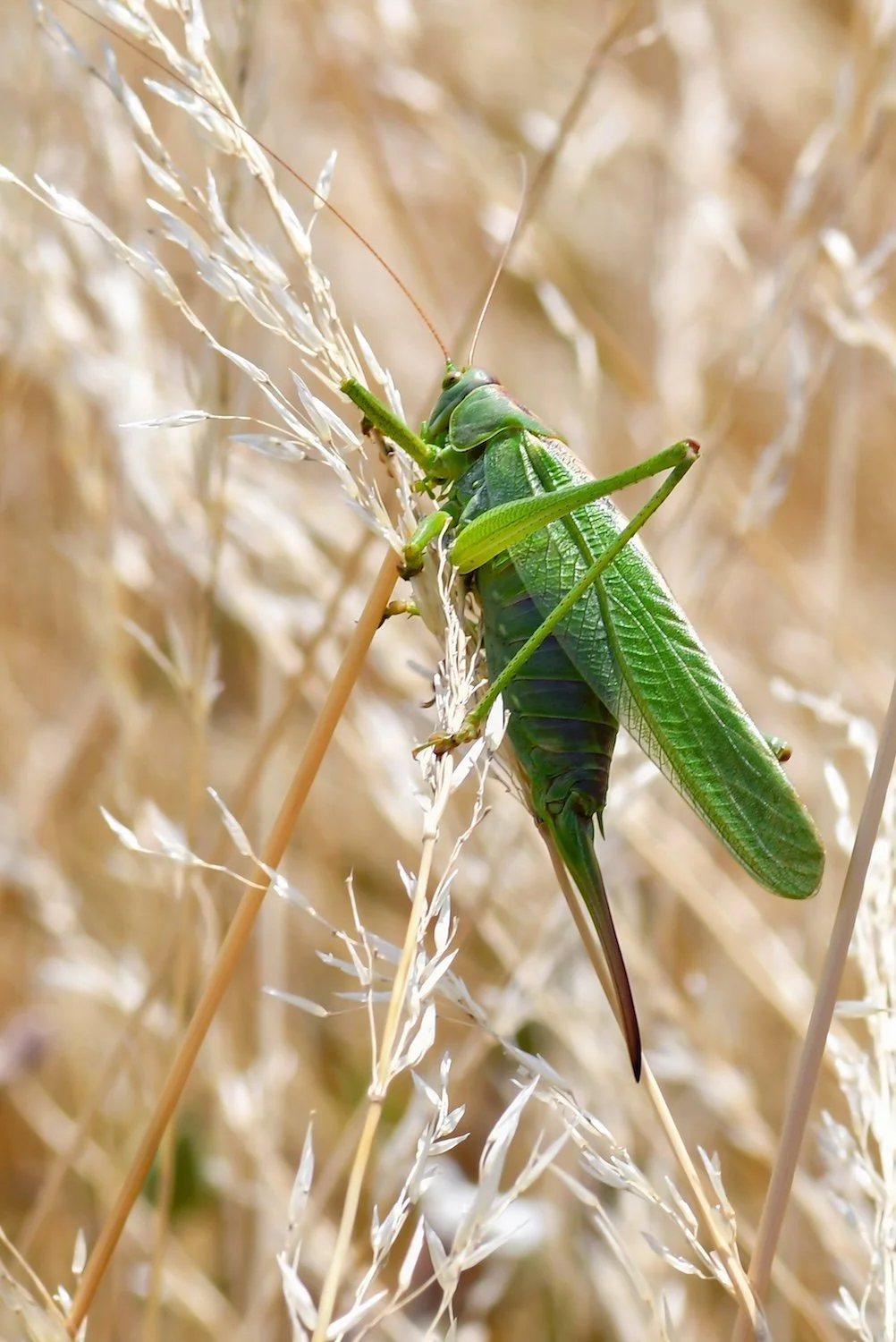
Perhaps the most beautiful thing about the grasshopper is that it doesn't overcomplicate its life.
It adapts to where it is. It makes use of what is available. It takes the leap when it is time to move. It accepts that abundance comes in cycles. It takes what the season offers and when that season is over, it moves on.
And maybe that is why a grasshopper is such a meaningful spiritual visitor.
Its message isn't necessarily that you need to change everything - just take the next leap.
It may simply be asking you to pay attention to the season you're in.
Are you being asked to adapt? To make better use of what you already have? To finally take that leap? To recognize that a quieter period isn't failure? To take advantage of an opportunity while it is available?
Or perhaps to stop waiting for something that has already run its course and move on?
The grasshopper doesn't know what next season will bring. It simply responds to the season it is in.
And perhaps you can, too.
__________________________________________________________
Want to Develop Your Intuition?
If the appearance of a grasshopper made you stop and wonder what it might mean, you're already practicing one of the foundations of intuitive development: paying attention to the signs, patterns, and messages that show up in your everyday life.
Inside The Membership, you'll learn how to strengthen that awareness, trust what you're sensing, and develop your intuitive abilities in a grounded, practical way.
You don't have to wait for a perfectly obvious sign. Learn to recognize and trust the messages that are already finding you.
Explore the Intuitive Development Membership →
Other Articles You May Enjoy: